Client · E-commerce · Brand
Souk3D
A maker in Detroit printing gifts for the Arab diaspora, selling through someone else's marketplace. We built her a storefront of her own: fully bilingual, organised around heritage rather than product categories, with the whole shop running on infrastructure she owns.
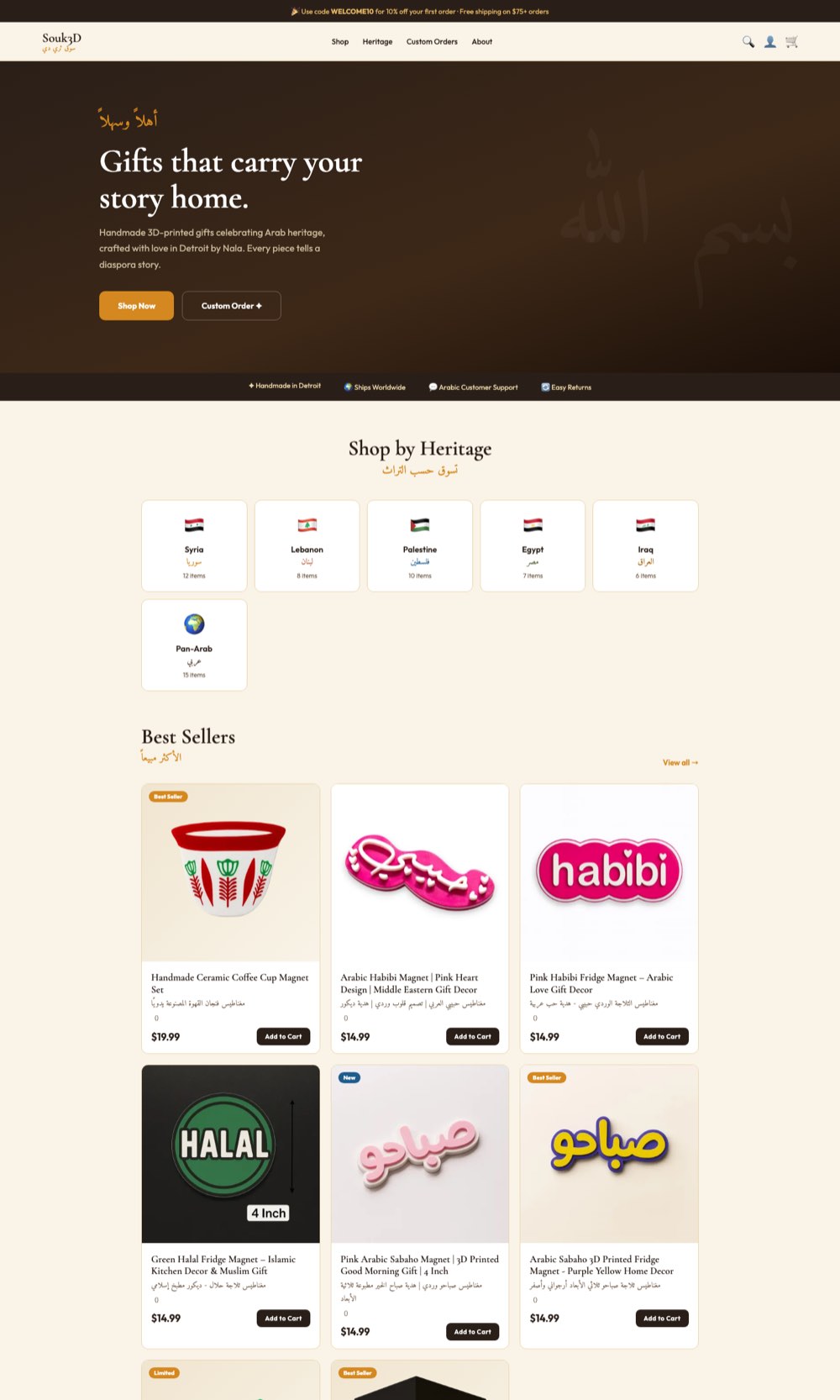
A live capture of souk3d.com. Hover to scroll the page, or open it for real ↗
The problem
Selling handmade work on a marketplace means renting your customers. You don't own the relationship, you don't own the list, you compete on price inside someone else's search results, and the brand you've built shows up as a thumbnail in a grid.
There was a second problem, and it's the more interesting one: this catalogue is Arabic. Product names, the meaning behind a jasmine motif, why a Damascus plaque matters to a Syrian family in Toronto. None of that survives a generic storefront that treats language as a plugin.
What we built
- Bilingual down to the product level Every product carries its English and Arabic name together, set in proper Arabic typography rather than a fallback font. The language isn't a toggle bolted on top. It's in the data model.
- Shop by heritage The primary navigation is Syria, Lebanon, Palestine, Egypt, Iraq and Pan-Arab, not "magnets" and "keychains". People aren't shopping for a category, they're shopping for home, and the store is built around that.
- A real storefront, not a template Catalogue, cart, discount codes, free-shipping thresholds, best-seller and new badges, occasion collections for Eid, weddings and graduation, verified customer reviews, and a custom-order path for commissions.
- Her own infrastructure A React front end on her own database, so the products, orders and customer list belong to her. The marketplace listings stay, as an extra sales channel linked from the product page, not as the whole business.
- A brand that sounds like a person The maker's own story runs through the site in both languages. For an independent maker that voice is the differentiator, so we designed around it instead of flattening it into shop copy.
A marketplace listing sells an object. A storefront built in your customers' language sells the reason they wanted it.